Dewatering Services
Dewatering Services
Ever wondered what is Dewatering or how you can manage groundwater?
Ever wondered what is Dewatering or how you can manage groundwater?
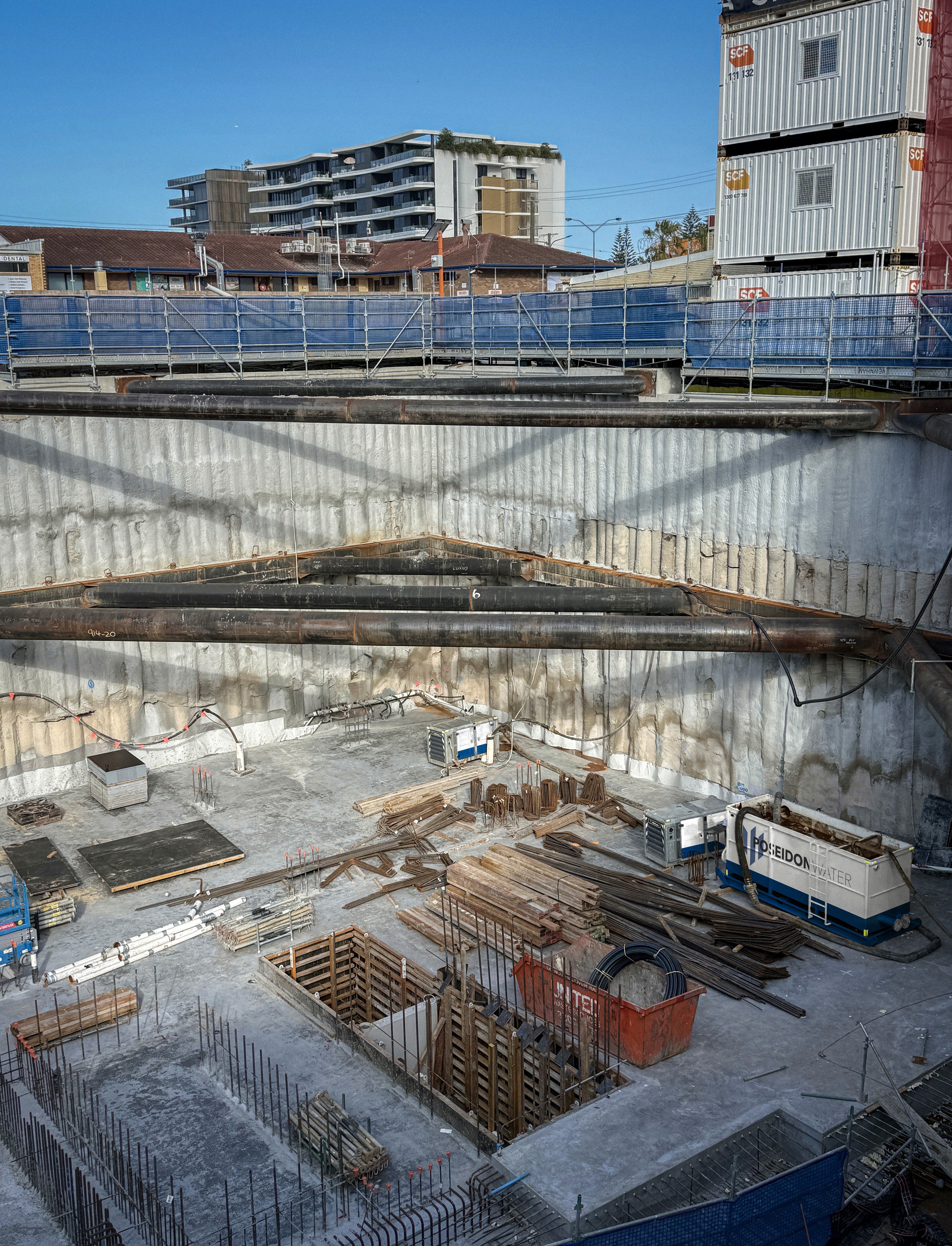
Precision Dewatering Services for Australian Construction, Civil & Mining Industries. Effective dewatering is the critical foundation of any excavation project below the water table, ensuring structural stability and safe working conditions. At Poseidon Water, we provide Tier 1 groundwater management solutions that mitigate risk, ensure environmental compliance, and keep your project schedule on time & on budget.
Precision Dewatering Services for Australian Construction, Civil & Mining Industries. Effective dewatering is the critical foundation of any excavation project below the water table, ensuring structural stability and safe working conditions. At Poseidon Water, we provide Tier 1 groundwater management solutions that mitigate risk, ensure environmental compliance, and keep your project schedule on time & on budget.
Precision Dewatering Services for Australian Construction, Civil & Mining Industries. Effective dewatering is the critical foundation of any excavation project below the water table, ensuring structural stability and safe working conditions. At Poseidon Water, we provide Tier 1 groundwater management solutions that mitigate risk, ensure environmental compliance, and keep your project schedule on time & on budget.
Precision Dewatering Services for Australian Construction, Civil & Mining Industries. Effective dewatering is the critical foundation of any excavation project below the water table, ensuring structural stability and safe working conditions. At Poseidon Water, we provide Tier 1 groundwater management solutions that mitigate risk, ensure environmental compliance, and keep your project schedule on time & on budget.
Content Guide
Content Guide
Content Guide
What is Dewatering
Why you need dewatering
Considerations before you dewater
Benefits of dewatering
Spear Dewatering Method
Deep Well Dewatering Method
Sump & Drainage Pump Dewatering Method
Disposal & Mobile Water Treatment
What is dewatering and why do it.
What is dewatering and why do it.
What is dewatering and why do it.
Dewatering isn’t just another step in construction, it’s the foundation of safety, stability, and structural integrity when working near canals, rivers, or high-water-table environments. Imagine a dry, controlled excavation where the ground remains stable, works progress smoothly, and your team stays safe. That’s the power of an effective dewatering system.
But here’s the reality most builders learn the hard way: if groundwater and surface water aren’t managed and disposed of properly, the consequences can be brutal. Poor groundwater control can trigger soil instability that jeopardises structural integrity, flooded excavations and stalled machinery, resulting in program delays, blown budgets and safety hazards and unnecessary environmental risks. In short, uncontrolled water doesn’t just slow you down, it can derail your entire project.
Dewatering isn’t just another step in construction, it’s the foundation of safety, stability, and structural integrity when working near canals, rivers, or high-water-table environments. Imagine a dry, controlled excavation where the ground remains stable, works progress smoothly, and your team stays safe. That’s the power of an effective dewatering system.
But here’s the reality most builders learn the hard way: if groundwater and surface water aren’t managed and disposed of properly, the consequences can be brutal. Poor groundwater control can trigger soil instability that jeopardises structural integrity, flooded excavations and stalled machinery, resulting in program delays, blown budgets and safety hazards and unnecessary environmental risks. In short, uncontrolled water doesn’t just slow you down, it can derail your entire project.
Dewatering isn’t just another step in construction, it’s the foundation of safety, stability, and structural integrity when working near canals, rivers, or high-water-table environments. Imagine a dry, controlled excavation where the ground remains stable, works progress smoothly, and your team stays safe. That’s the power of an effective dewatering system.
But here’s the reality most builders learn the hard way: if groundwater and surface water aren’t managed and disposed of properly, the consequences can be brutal. Poor groundwater control can trigger soil instability that jeopardises structural integrity, flooded excavations and stalled machinery, resulting in program delays, blown budgets and safety hazards and unnecessary environmental risks. In short, uncontrolled water doesn’t just slow you down, it can derail your entire project.
Dewatering isn’t just another step in construction, it’s the foundation of safety, stability, and structural integrity when working near canals, rivers, or high-water-table environments. Imagine a dry, controlled excavation where the ground remains stable, works progress smoothly, and your team stays safe. That’s the power of an effective dewatering system.
But here’s the reality most builders learn the hard way: if groundwater and surface water aren’t managed and disposed of properly, the consequences can be brutal. Poor groundwater control can trigger soil instability that jeopardises structural integrity, flooded excavations and stalled machinery, resulting in program delays, blown budgets and safety hazards and unnecessary environmental risks. In short, uncontrolled water doesn’t just slow you down, it can derail your entire project.
Common applications include:
Basement excavations
Lift shafts and footings
Trenching for stormwater, sewer, or water lines
Road and bridge construction
Mining and quarry operations
Backyard Pool installs
Common applications include:
Basement excavations
Lift shafts and footings
Trenching for stormwater, sewer, or water lines
Road and bridge construction
Mining and quarry operations
Common applications include:
Basement excavations
Lift shafts and footings
Trenching for stormwater, sewer, or water lines
Road and bridge construction
Mining and quarry operations
Backyard Pool installs
Engineered Groundwater Control Systems
Engineered Groundwater Control Systems
Engineered Groundwater Control Systems
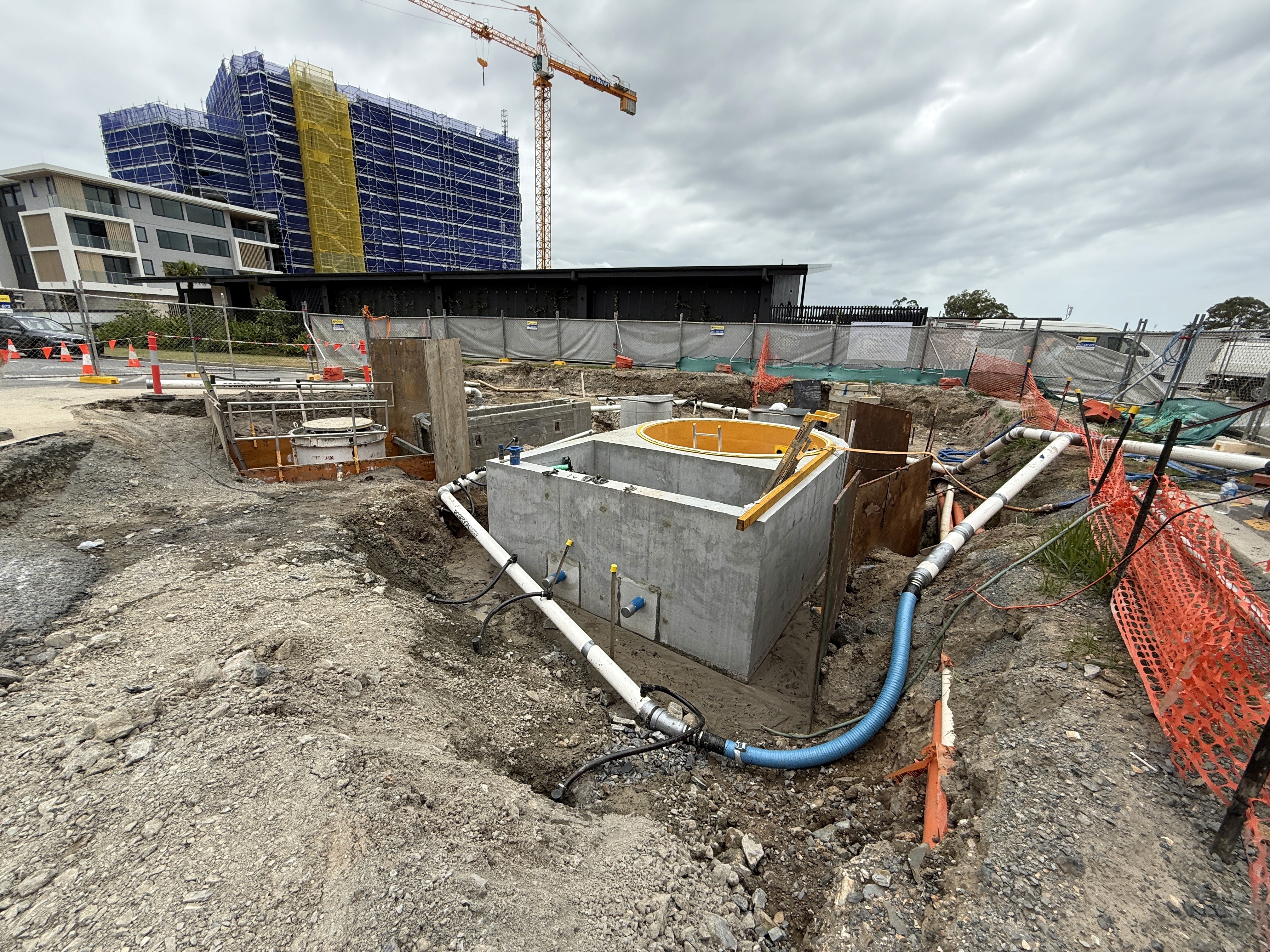
At Poseidon Water, we view dewatering as a critical structural component of your project. Too often, the industry treats groundwater management as a reactive measure, simply placing a pump in a hole and hoping for the best. We challenge this "set and forget" mentality.
Soil mechanics and hydrogeology vary significantly across Gold Coast, Brisbane and the rest of Australia, from the sandy coastal belts to the clay-heavy inland regions. As specialist dewatering contractors we do not believe in a "one-size-fits-all" approach. At Poseidon Water assess site-specific geology, excavation requirements and project constraints to design the most efficient system for your needs.
Our core dewatering services include:
Wellpoint Dewatering Installation
Wellpoint Dewatering Installation
Wellpoint Dewatering Installation
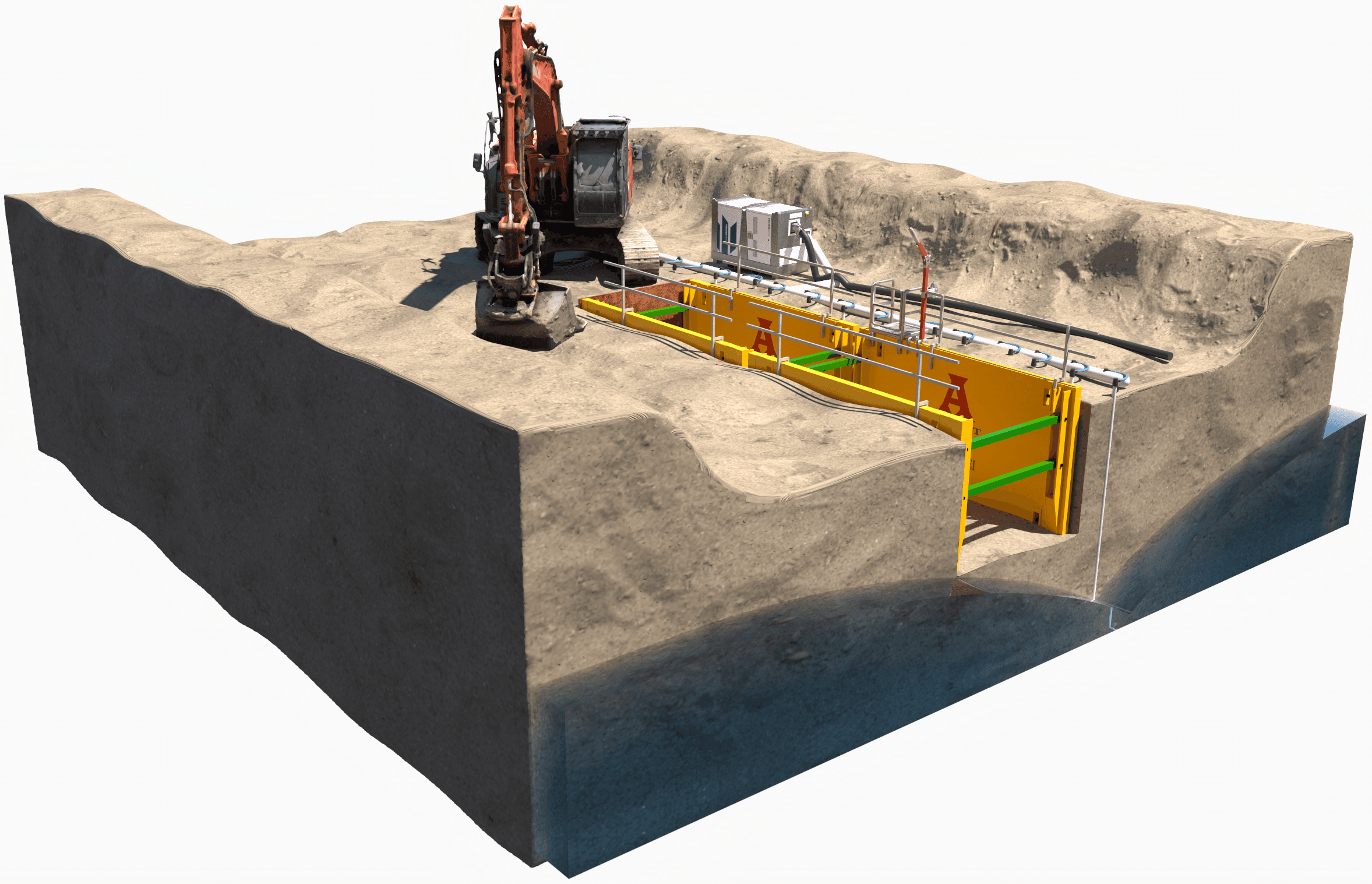
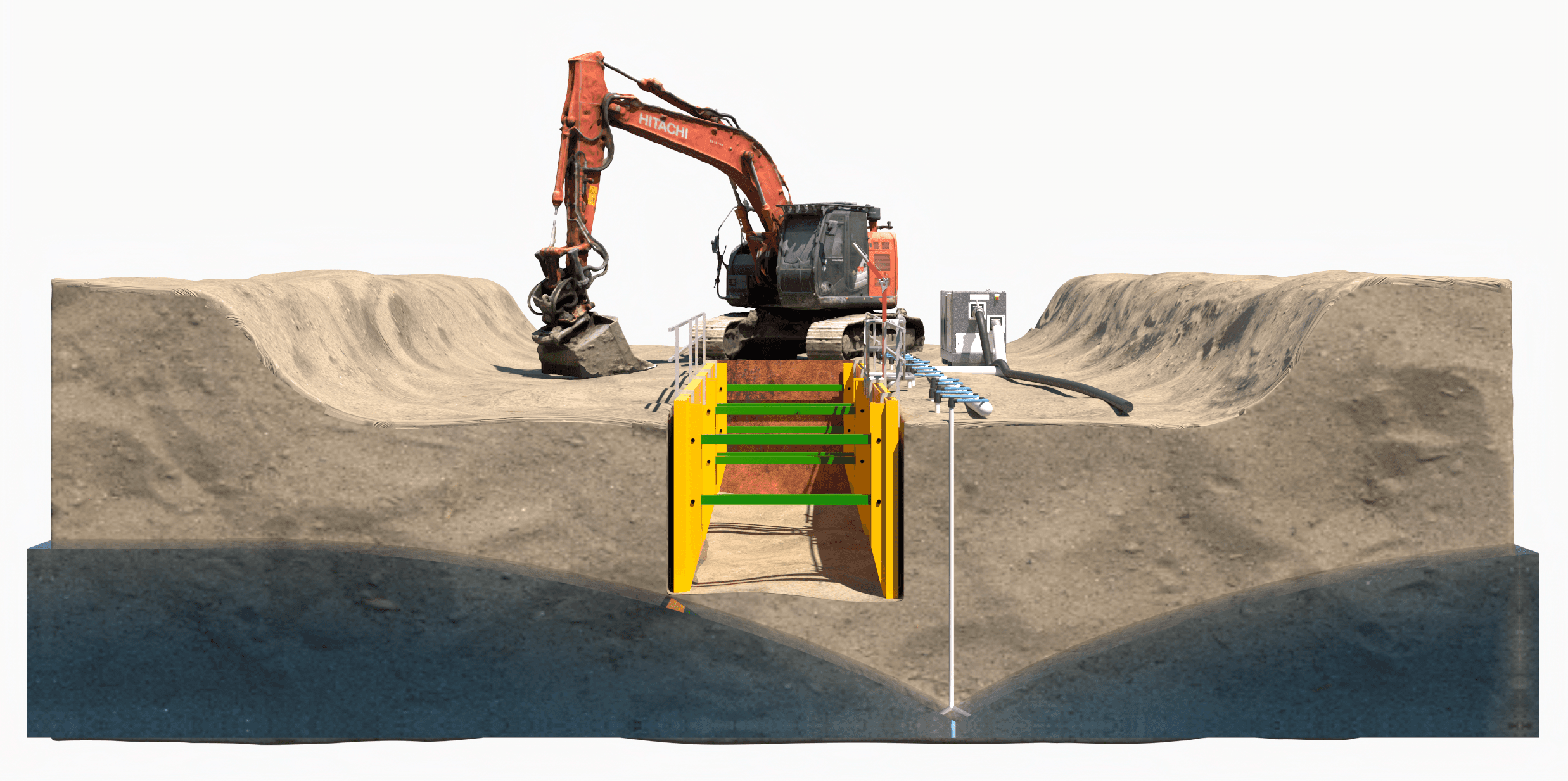
Wellpoint systems (often referred to as dewatering spears) are the industry standard for shallow to medium-depth excavations in granular soils like sands and silty sands.
How it works: A series of small-diameter risers with screened intake points are jetted into the ground and connected to a common suction header pipe. A vacuum-assisted pump draws water from the ground, creating a localized drawdown.
Engineering Constraints: Due to the physical limits of suction lift (atmospheric pressure), wellpoint systems are generally effective for drawdown depths of up to 5–6 metres. For deeper excavations, we design multi-stage systems.
Best Application: Trenching, pipeline installation, overruns, and shallow basement excavations in sandy to silty sand soil profiles.
Wellpoint systems (often referred to as dewatering spears) are the industry standard for shallow to medium-depth excavations in granular soils like sands and silty sands.
How it works: A series of small-diameter risers with screened intake points are jetted into the ground and connected to a common suction header pipe. A vacuum-assisted pump draws water from the ground, creating a localized drawdown.
Engineering Constraints: Due to the physical limits of suction lift (atmospheric pressure), wellpoint systems are generally effective for drawdown depths of up to 5–6 metres. For deeper excavations, we design multi-stage systems.
Best Application: Trenching, pipeline installation, overruns, and shallow basement excavations in sandy to silty sand soil profiles.
Wellpoint systems (often referred to as dewatering spears) are the industry standard for shallow to medium-depth excavations in granular soils like sands and silty sands.
How it works: A series of small-diameter risers with screened intake points are jetted into the ground and connected to a common suction header pipe. A vacuum-assisted pump draws water from the ground, creating a localized drawdown.
Engineering Constraints: Due to the physical limits of suction lift (atmospheric pressure), wellpoint systems are generally effective for drawdown depths of up to 5–6 metres. For deeper excavations, we design multi-stage systems.
Best Application: Trenching, pipeline installation, overruns, and shallow basement excavations in sandy to silty sand soil profiles.
Want Tailored Dewatering Support Today?
Don’t leave your dewatering strategy to guesswork. Partner with Poseidon Water for dependable, data-driven results. Talk to a dewatering expert today and get the clarity your project needs to move forward with confidence.
Want Tailored Dewatering Support Today?
Don’t leave your dewatering strategy to guesswork. Partner with Poseidon Water for dependable, data-driven results. Talk to a dewatering expert today and get the clarity your project needs to move forward with confidence.
Want Tailored Dewatering Support Today?
Don’t leave your dewatering strategy to guesswork. Partner with Poseidon Water for dependable, data-driven results. Talk to a dewatering expert today and get the clarity your project needs to move forward with confidence.
Deep Well Dewatering Systems
Deep Well Dewatering Systems
When excavation depths exceed the limits of suction lift, or when dealing with high-permeability aquifers requiring massive flow rates, we utilise deep well systems.
How it works: We drill bored wells (typically 200mm–600mm diameter) and install high-efficiency deep well submersible pumps at the bottom of the well casing. These pumps push water to the surface rather than relying on suction.
Capabilities: This method allows for significant drawdown (20m+) and can handle high flow volumes. It also allows for wider spacing between wells compared to wellpoints, keeping the construction site less obstructed.
Best Application: Deep basements, shafts, and large-scale civil works where the water table must be lowered significantly.
When excavation depths exceed the limits of suction lift, or when dealing with high-permeability aquifers requiring massive flow rates, we utilise deep well systems.
How it works: We drill bored wells (typically 200mm–600mm diameter) and install high-efficiency deep well submersible pumps at the bottom of the well casing. These pumps push water to the surface rather than relying on suction.
Capabilities: This method allows for significant drawdown (20m+) and can handle high flow volumes. It also allows for wider spacing between wells compared to wellpoints, keeping the construction site less obstructed.
Best Application: Deep basements, shafts, and large-scale civil works where the water table must be lowered significantly.
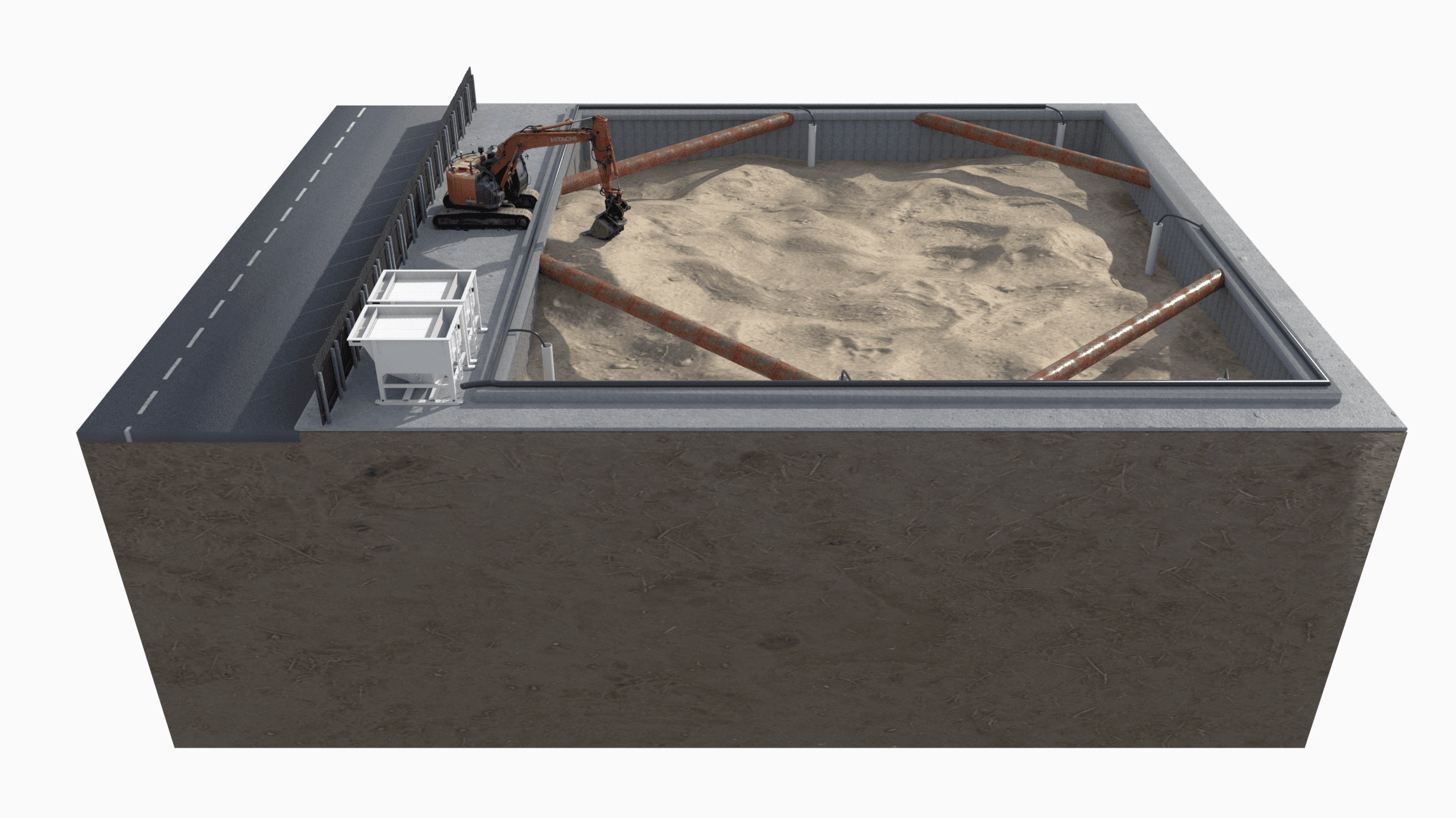

Deep Well Dewatering Systems
When excavation depths exceed the limits of suction lift, or when dealing with high-permeability aquifers requiring massive flow rates, we utilise deep well systems.
How it works: We drill bored wells (typically 200mm–600mm diameter) and install high-efficiency deep well submersible pumps at the bottom of the well casing. These pumps push water to the surface rather than relying on suction.
Capabilities: This method allows for significant drawdown (20m+) and can handle high flow volumes. It also allows for wider spacing between wells compared to wellpoints, keeping the construction site less obstructed.
Best Application: Deep basements, shafts, and large-scale civil works where the water table must be lowered significantly.
Dewatering Trenching & Sump Pumping (Open Pumping)
While often the cheapest method, sump pumping is frequently misapplied. It involves allowing groundwater to seep into the excavation and pumping it out from a low point.
Risk Factor: In fine-grained soils, aggressive sump pumping can lead to "piping, the removal of soil fines along with the water. This undermines the structural integrity of the ground and can lead to collapse. We generally recommend this only for minor nuisance water or in stable, coarse rock formations.
Trenching: Though not a common method, dewatering sock can be installed via long trenches to capture the groundwater over a large area. A sump is typically installed at the end of the trench allowing for the over drawdown of the groundwater table in the area.
Dewatering Trenching & Sump Pumping (Open Pumping)
Dewatering Trenching & Sump Pumping (Open Pumping)
While often the cheapest method, sump pumping is frequently misapplied. It involves allowing groundwater to seep into the excavation and pumping it out from a low point.
Risk Factor: In fine-grained soils, aggressive sump pumping can lead to "piping, the removal of soil fines along with the water. This undermines the structural integrity of the ground and can lead to collapse. We generally recommend this only for minor nuisance water or in stable, coarse rock formations.
Trenching: Though not a common method, dewatering sock can be installed via long trenches to capture the groundwater over a large area. A sump is typically installed at the end of the trench allowing for the over drawdown of the groundwater table in the area.
While often the cheapest method, sump pumping is frequently misapplied. It involves allowing groundwater to seep into the excavation and pumping it out from a low point.
Risk Factor: In fine-grained soils, aggressive sump pumping can lead to "piping, the removal of soil fines along with the water. This undermines the structural integrity of the ground and can lead to collapse. We generally recommend this only for minor nuisance water or in stable, coarse rock formations.
Trenching: Though not a common method, dewatering sock can be installed via long trenches to capture the groundwater over a large area. A sump is typically installed at the end of the trench allowing for the over drawdown of the groundwater table in the area.
What to look for in a dewatering company?
FAST & RELIABLE SUPPORT. Construction sites are full of unknowns with a bunch of changing variables. No matter if its day or night, rain, hail or shine, choose a team that shows up and gets the job done.
What to look for in a dewatering company?
FAST & RELIABLE SUPPORT. Construction sites are full of unknowns with a bunch of changing variables. No matter if its day or night, rain, hail or shine, choose a team that shows up and gets the job done.
What to look for in a dewatering company?
FAST & RELIABLE SUPPORT. Construction sites are full of unknowns with a bunch of changing variables. No matter if its day or night, rain, hail or shine, choose a team that shows up and gets the job done.
What To Consider Before Choosing A Dewatering Method?
Before selecting any dewatering method, the decision must be grounded in real data, not assumptions.
Start with geotechnical and groundwater investigations, backed by detailed risk assessments that reflect the true site conditions and construction methodology. These form the backbone of effective groundwater control and help determine the most suitable system, whether deep wells, wellpoints, sump pumping or a hybrid approach.
.
And don’t overlook the regulatory side. Engage early with local councils, environmental authorities and regulators to understand the required water disposal criteria, discharge quality limits and compliance expectations. This ensures your design is not only technically correct, but meets environmental and legislative requirements from day one, avoiding costly redesigns, delays or shutdowns later in the program.
What you might need to ask yourself?
What is the estimated flow rate for the dewatering system? or do i know the the permeability or hydraulic conductivity of the surrounding area? - (See our drawdown calculator for more information here)
What is the excavation depth or drawdown required to allow for a dry excavation including any compaction requirements?
Is there any hydrostatic cut-off available from surrounding retention systems or ground conditions?
Is the site located in a high risk acid Sulphate soil area or iron staining area and is there any groundwater quality data available?
What options are available for the discharge of the dewatering effluent and do i need approval?
Is water treatment required during dewatering and prior to disposal off-site?
What To Consider Before Choosing A Dewatering Method?
What To Consider Before Choosing A Dewatering Method?
Before selecting any dewatering method, the decision must be grounded in real data, not assumptions.
Start with geotechnical and groundwater investigations, backed by detailed risk assessments that reflect the true site conditions and construction methodology. These form the backbone of effective groundwater control and help determine the most suitable system, whether deep wells, wellpoints, sump pumping or a hybrid approach.
And don’t overlook the regulatory side. Engage early with local councils, environmental authorities and regulators to understand the required water disposal criteria, discharge quality limits and compliance expectations. This ensures your design is not only technically correct, but meets environmental and legislative requirements from day one, avoiding costly redesigns, delays or shutdowns later in the program.
Before selecting any dewatering method, the decision must be grounded in real data, not assumptions.
Start with geotechnical and groundwater investigations, backed by detailed risk assessments that reflect the true site conditions and construction methodology. These form the backbone of effective groundwater control and help determine the most suitable system, whether deep wells, wellpoints, sump pumping or a hybrid approach.
.
And don’t overlook the regulatory side. Engage early with local councils, environmental authorities and regulators to understand the required water disposal criteria, discharge quality limits and compliance expectations. This ensures your design is not only technically correct, but meets environmental and legislative requirements from day one, avoiding costly redesigns, delays or shutdowns later in the program.
What you might need to ask yourself?
What is the estimated flow rate for the dewatering system? or do i know the the permeability or hydraulic conductivity of the surrounding area? - (See our drawdown calculator for more information here)
What is the excavation depth or drawdown required to allow for a dry excavation including any compaction requirements?
Is there any hydrostatic cut-off available from surrounding retention systems or ground conditions?
Is the site located in a high risk acid Sulphate soil area or iron staining area and is there any groundwater quality data available?
What options are available for the discharge of the dewatering effluent and do i need approval?
Is water treatment required during dewatering and prior to disposal off-site?
What you might need to ask yourself?
What is the estimated flow rate for the dewatering system? or do i know the the permeability or hydraulic conductivity of the surrounding area? - (See our drawdown calculator for more information here)
What is the excavation depth or drawdown required to allow for a dry excavation including any compaction requirements?
Is there any hydrostatic cut-off available from surrounding retention systems or ground conditions?
Is the site located in a high risk acid Sulphate soil area or iron staining area and is there any groundwater quality data available?
What options are available for the discharge of the dewatering effluent and do i need approval?
Is water treatment required during dewatering and prior to disposal off-site?
What you might need to ask yourself?
What is the estimated flow rate for the dewatering system? or do i know the the permeability or hydraulic conductivity of the surrounding area? - (See our drawdown calculator for more information here)
What is the excavation depth or drawdown required to allow for a dry excavation including any compaction requirements?
Is there any hydrostatic cut-off available from surrounding retention systems or ground conditions?
Is the site located in a high risk acid Sulphate soil area or iron staining area and is there any groundwater quality data available?
What options are available for the discharge of the dewatering effluent and do i need approval?
Is water treatment required during dewatering and prior to disposal off-site?
''A Note from the Founder: ''In my experience across major infrastructure & construction projects, the biggest cost/time blowouts come from treating dewatering as an afterthought. I’ve seen sites shut down or severely delayed because the groundwater conditions were guessed or underestimated. At Poseidon, i ensure every strategy is backed by available data or years of industry experience before a single pump is turned on. We don’t guess'''
''A Note from the Founder: ''In my experience across major infrastructure & construction projects, the biggest cost/time blowouts come from treating dewatering as an afterthought. I’ve seen sites shut down or severely delayed because the groundwater conditions were guessed or underestimated. At Poseidon, i ensure every strategy is backed by available data or years of industry experience before a single pump is turned on. We don’t guess'''
''A Note from the Founder: ''In my experience across major infrastructure & construction projects, the biggest cost/time blowouts come from treating dewatering as an afterthought. I’ve seen sites shut down or severely delayed because the groundwater conditions were guessed or underestimated. At Poseidon, i ensure every strategy is backed by available data or years of industry experience before a single pump is turned on. We don’t guess'''
''A Note from the Founder: ''In my experience across major infrastructure & construction projects, the biggest cost/time blowouts come from treating dewatering as an afterthought. I’ve seen sites shut down or severely delayed because the groundwater conditions were guessed or underestimated. At Poseidon, i ensure every strategy is backed by available data or years of industry experience before a single pump is turned on. We don’t guess'''
Relied on by Industry experts
Relied on by Industry experts


Environmental Compliance and Water Treatment
Environmental Compliance and Water Treatment
Environmental Compliance and Water Treatment
In Queensland, New South Wales and across Australia, environmental regulations around dewatering discharge are extremely stringent. Releasing untreated groundwater into stormwater networks, canals, rivers or natural waterways can trigger major fines, environmental non-compliance notices, project shutdowns and serious damage to your reputation and program.
At Poseidon Water, we don’t just extract water, we manage it responsibly. Every drop removed must meet strict discharge criteria, so understanding the chemistry and environmental risk profile is critical before a single pump starts.
Did you know groundwater commonly contains a range of contaminants that must be treated and stabilised prior to disposal and the team at Poseidon water have the right equipment and expertise to get it done. Contact us today or head over to your Mobile Water Treatment page to find out more. Because when environmental officers arrive onsite, you want confidence, not excuses.
In Queensland, New South Wales and across Australia, environmental regulations around dewatering discharge are extremely stringent. Releasing untreated groundwater into stormwater networks, canals, rivers or natural waterways can trigger major fines, environmental non-compliance notices, project shutdowns and serious damage to your reputation and program.
At Poseidon Water, we don’t just extract water, we manage it responsibly. Every drop removed must meet strict discharge criteria, so understanding the chemistry and environmental risk profile is critical before a single pump starts.
Did you know groundwater commonly contains a range of contaminants that must be treated and stabilised prior to disposal and the team at Poseidon water have the right equipment and expertise to get it done. Contact us today or head over to your Mobile Water Treatment page to find out more. Because when environmental officers arrive onsite, you want confidence, not excuses.
In Queensland, New South Wales and across Australia, environmental regulations around dewatering discharge are extremely stringent. Releasing untreated groundwater into stormwater networks, canals, rivers or natural waterways can trigger major fines, environmental non-compliance notices, project shutdowns and serious damage to your reputation and program.
At Poseidon Water, we don’t just extract water, we manage it responsibly. Every drop removed must meet strict discharge criteria, so understanding the chemistry and environmental risk profile is critical before a single pump starts.
Did you know groundwater commonly contains a range of contaminants that must be treated and stabilised prior to disposal and the team at Poseidon water have the right equipment and expertise to get it done. Contact us today or head over to your Mobile Water Treatment page to find out more. Because when environmental officers arrive onsite, you want confidence, not excuses.
In Queensland, New South Wales and across Australia, environmental regulations around dewatering discharge are extremely stringent. Releasing untreated groundwater into stormwater networks, canals, rivers or natural waterways can trigger major fines, environmental non-compliance notices, project shutdowns and serious damage to your reputation and program.
At Poseidon Water, we don’t just extract water, we manage it responsibly. Every drop removed must meet strict discharge criteria, so understanding the chemistry and environmental risk profile is critical before a single pump starts.
Did you know groundwater commonly contains a range of contaminants that must be treated and stabilised prior to disposal and the team at Poseidon water have the right equipment and expertise to get it done. Contact us today or head over to your Mobile Water Treatment page to find out more. Because when environmental officers arrive onsite, you want confidence, not excuses.
Why Partner with Poseidon Water?
Why Partner with Poseidon Water?
Why Partner with Poseidon Water?
Why Partner with Poseidon Water?
We are not general hire equipment providers; we are specialists. Our fleet is maintained to tier 1 standards, and our team is trained to adapt to changing site conditions instantly. By combining technical rigour with practical field experience, we mitigate the risks associated with ground subsidence and water ingress.
If you require a partner who views dewatering as a precise engineering discipline rather than a generic hire item or black magic, contact Poseidon Water today to discuss your next project.
We are not general hire equipment providers; we are specialists. Our fleet is maintained to tier 1 standards, and our team is trained to adapt to changing site conditions instantly. By combining technical rigour with practical field experience, we mitigate the risks associated with ground subsidence and water ingress.
If you require a partner who views dewatering as a precise engineering discipline rather than a generic hire item or black magic, contact Poseidon Water today to discuss your next project.
We are not general hire equipment providers; we are specialists. Our fleet is maintained to tier 1 standards, and our team is trained to adapt to changing site conditions instantly. By combining technical rigour with practical field experience, we mitigate the risks associated with ground subsidence and water ingress.
If you require a partner who views dewatering as a precise engineering discipline rather than a generic hire item or black magic, contact Poseidon Water today to discuss your next project.
We are not general hire equipment providers; we are specialists. Our fleet is maintained to tier 1 standards, and our team is trained to adapt to changing site conditions instantly. By combining technical rigour with practical field experience, we mitigate the risks associated with ground subsidence and water ingress.
If you require a partner who views dewatering as a precise engineering discipline rather than a generic hire item or black magic, contact Poseidon Water today to discuss your next project.
"I would highly recommend Josh and Poseidon Water to any builder undertaking large format basements or complex groundwater management works on the Gold Coast. His contribution to our project was invaluable."
Cameron McCloskey
Project Manager | LPS Group Pty Ltd
"I would highly recommend Josh and Poseidon Water to any builder undertaking large format basements or complex groundwater management works on the Gold Coast. His contribution to our project was invaluable."
Cameron McCloskey
Project Manager | LPS Group Pty Ltd
"I would highly recommend Josh and Poseidon Water to any builder undertaking large format basements or complex groundwater management works on the Gold Coast. His contribution to our project was invaluable."
Cameron McCloskey
Project Manager | LPS Group Pty Ltd
"Tight job between waterways with tricky groundwater. Poseidon sorted out the dewatering & water treatment and kept us moving. Good communication, met our deadlines, no dramas. Would definitely use them again."
Nathan Batrachenko
Director | NB Construction Pty Ltd
"Tight job between waterways with tricky groundwater. Poseidon sorted out the dewatering & water treatment and kept us moving. Good communication, met our deadlines, no dramas. Would definitely use them again."
Nathan Batrachenko
Director | NB Construction Pty Ltd
"Tight job between waterways with tricky groundwater. Poseidon sorted out the dewatering & water treatment and kept us moving. Good communication, met our deadlines, no dramas. Would definitely use them again."
Nathan Batrachenko
Director | NB Construction Pty Ltd
"Deep sewer connection with difficult ground conditions - sand, coffee rock, water everywhere. Josh from Poseidon figured out what was going on and got the hole dry so we could work. Highly recommend"
Elliott Martin
Director | Raynor Civil Plumbing pty Ltd
"Deep sewer connection with difficult ground conditions - sand, coffee rock, water everywhere. Josh from Poseidon figured out what was going on and got the hole dry so we could work. Highly recommend"
Elliott Martin
Director | Raynor Civil Plumbing pty Ltd
"Deep sewer connection with difficult ground conditions - sand, coffee rock, water everywhere. Josh from Poseidon figured out what was going on and got the hole dry so we could work. Highly recommend"
Elliott Martin
Director | Raynor Civil Plumbing pty Ltd